You waited months, maybe years, for a decision. The letter finally arrived. And somewhere near the top it says either “fully favorable” or “partially favorable” — and now you’re trying to figure out what that actually means for you.
Both are approvals. That’s the first thing to understand. Neither one is a denial. But they’re not the same thing, and the difference between them has real financial implications that are worth understanding clearly before you assume everything is settled.
What a Fully Favorable Decision Means
A fully favorable decision means the SSA or ALJ agreed with everything you claimed. Your disability onset date, the date your condition became severe enough to prevent substantial work, was accepted exactly as you submitted it. Your benefit amount is calculated from that date, subject to the standard five-month waiting period, and back pay is calculated from there as well.
In practical terms, a fully favorable decision is the best outcome you can get. The onset date you established, which determines how far back your back pay goes, was not moved. Nothing was trimmed or adjusted against you.
If your letter says fully favorable, your next steps are straightforward. Review the benefit amount and onset date listed in the decision, confirm they match what you expected, and follow up with the SSA on payment timing if you haven’t received information on that yet.
What a Partially Favorable Decision Means
A partially favorable decision means you were approved, but not entirely on your own terms. Something was changed from what you originally claimed. And in the vast majority of partially favorable decisions, that something is the onset date.
Here’s what typically happens. You filed claiming your disability began on a certain date, maybe the date you stopped working or the date your condition was first diagnosed. The ALJ reviewed your records and determined your disability didn’t become severe enough to meet the SSA’s definition until a later date. They approved you from that later date instead of the one you claimed.
That gap matters because of back pay. Every month between your claimed onset date and the amended onset date in a partially favorable decision is a month of back pay you won’t receive. Depending on how far apart those dates are and what your monthly benefit amount is, that difference can be significant. A six-month gap at $1,800 a month is $10,800. A twelve-month gap is nearly double that.
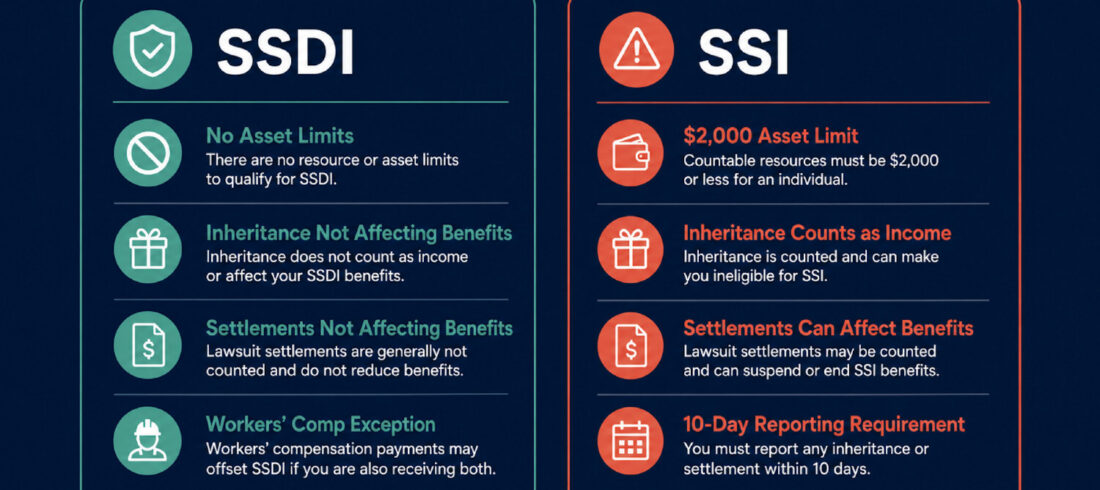
A partially favorable decision can also affect which program your benefits fall under. If the ALJ moved your onset date forward past a certain point, it’s possible you no longer qualify for SSDI for that period and may only qualify for SSI instead, which has different payment rules and lower maximum amounts. This doesn’t happen in every partially favorable case, but it’s worth checking your decision letter carefully to understand exactly what was approved and under which program.
Why Do Partially Favorable Decisions Happen
Usually it comes down to the medical record. The ALJ is required to establish your onset date based on objective medical evidence. If your records from the period you claimed don’t clearly document the severity of your condition at that time, the ALJ may find that the evidence only supports disability beginning at a later point when documentation becomes more definitive.
It can also happen when there’s a gap in treatment. If you claimed disability beginning in January but didn’t start consistent medical treatment until August, an ALJ may use the treatment start date as the anchor for the onset determination rather than the earlier date you claimed.
Sometimes it comes down to the work history. If you continued working in some capacity, even part-time or reduced hours, after the onset date you claimed, that can complicate the ALJ’s determination of exactly when your disability became severe enough under SSA standards.
None of this means the ALJ made the right call. It means the evidence in your file supported a different conclusion than the one you were hoping for. That’s a meaningful distinction, because it means the decision can potentially be challenged.
Can You Appeal a Partially Favorable Decision
Yes. And this is where a lot of people get tripped up, because receiving any approval after a long process feels like something you shouldn’t question. But a partially favorable decision is appealable, and appealing specifically the onset date determination is not uncommon.
The appeal goes to the Appeals Council. You’re not appealing the approval itself, you’re appealing the specific finding about your onset date. The argument is that the evidence supports an earlier onset than what the ALJ determined, and if additional medical documentation exists that wasn’t fully considered, or if the ALJ’s reasoning on the onset date had legal errors, the Appeals Council can review that.
There are real tradeoffs to consider before deciding whether to appeal. Going to the Appeals Council takes time. The process can stretch many months to over a year. During that period your approved benefits are still being paid based on the partially favorable decision, so you’re not waiting without income while the appeal processes. But you’re also extending the legal process and there’s always a risk that an appeal doesn’t go your way.
Most people in this situation benefit from talking through the decision with a disability attorney before deciding whether to appeal the onset date. An attorney who has read the actual ALJ decision can give you a realistic assessment of whether the onset date finding was well-supported or whether there’s a legitimate basis to challenge it. That conversation is usually free as part of a consultation, and it’s worth having before the appeal deadline passes.
The deadline to appeal to the Appeals Council is sixty days from the date on the decision letter. Not from when you received it. From the date on it.
The Decision Letter Itself: What to Look For
Whether your decision is fully or partially favorable, the letter contains specific information worth reviewing carefully.
The established onset date. This is the date the ALJ determined your disability began. For a fully favorable decision it should match what you claimed. For a partially favorable decision it will be later than what you claimed, and that date is the one used to calculate everything going forward.
The benefit amount. Your monthly SSDI payment is based on your earnings record, not on the onset date, so a partially favorable decision with a later onset date doesn’t reduce your monthly benefit amount. What it reduces is back pay.
The back pay calculation. The letter should explain how back pay was calculated. Review this against your own understanding of the timeline. If something doesn’t add up, the SSA can walk you through the calculation.
Whether the decision covers SSDI, SSI, or both. As mentioned earlier, a shifted onset date can affect which program applies and for which period. Make sure you understand what you were approved for specifically.
Any conditions or next steps required. Some decisions include requirements around continuing medical treatment or upcoming reviews. Make note of anything the letter says you need to do or be aware of going forward.
Payment Timing After Either Decision
After a favorable decision at the hearing level, the SSA processes the payment through their payment center. This takes time. The ALJ issues the decision, it goes to the SSA payment center, they calculate the benefit amount and back pay, and then payments are released. The timeline from decision to first payment typically runs four to six months, though it varies.
Back pay usually arrives as a lump sum direct deposit, separate from the first ongoing monthly payment. If you had legal representation, attorney fees are deducted from the back pay before it reaches you and paid directly to your attorney by the SSA.
If several months have passed since a favorable decision and you haven’t received payment or any communication from the SSA about payment timing, it’s worth calling to check on the status. The payment center processes a high volume of cases and things occasionally stall. A phone call can often move things along.
One More Thing Worth Knowing
Getting a partially favorable decision after a long fight can feel deflating, especially when you find out what the onset date change means for your back pay. That reaction is completely understandable. You fought for a specific outcome and what you got back is close but not exactly what you were after.
It helps to separate two things. The approval itself, which is real and which starts your ongoing benefits, and the onset date question, which is a separate issue that may or may not be worth pursuing further depending on the specifics of your case.
You don’t have to decide immediately. You have sixty days. Use some of that time to understand exactly what the decision says, what the financial difference is between the claimed and established onset dates, and whether talking to an attorney about an appeal makes sense for your situation. Then make the call with full information rather than in the immediate aftermath of a complicated letter.