Maryland veterans have served our nation with honor, often facing unique challenges upon returning to civilian life, and securing financial stability is one of them. That’s why understanding how to maximize VA disability benefits in Maryland and federal Social Security awards is key.
Maryland offers a robust network of support, but the intersection of state and federal systems requires a clear strategy. This guide breaks down how to access the compensation you have earned through your service and your career.
The Maryland Veteran Advantage
The Maryland Department of Veterans Affairs (MDVA) acts as a primary hub for specialized resources. Unlike many other states, Maryland provides specific state-level perks that are tied directly to your federal disability rating. If you are a veteran living in the Baltimore or National Capital regions, your service-connected disabilities are evaluated by local regional offices that understand the specific healthcare landscape of the DMV area.
One of the most significant advantages for Maryland veterans is the interaction between disability ratings and state tax exemptions. For example, veterans with a 100% service-connected, permanent, and total disability rating may be eligible for a full property tax exemption on their primary residence. Even at lower ratings, there are various state-level credits and programs designed to reduce the cost of living for those who served.
The Concurrent Benefits Rule
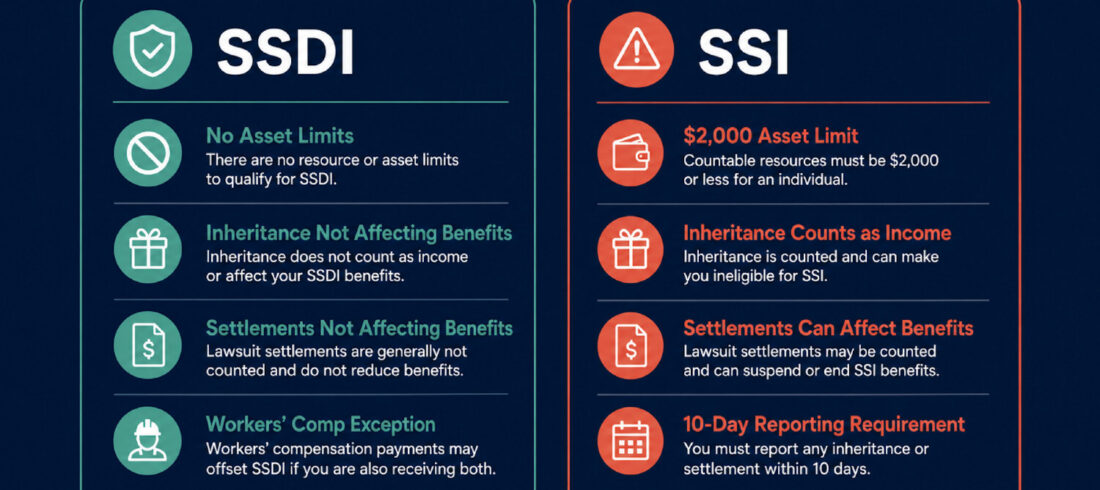
A common misconception among veterans is that you must choose between VA compensation and Social Security benefits. This is not true. You can receive VA disability benefits in Maryland and Social Security Disability Insurance (SSDI) at the same time. These are two separate benefit programs funded through different mechanisms.
The Social Security Administration (SSA) acknowledges the sacrifices of veterans through an “expedited” process. If you have a VA rating of 100% Permanent & Total (P&T), the SSA will fast-track the processing of your SSDI application. However, a high VA rating does not automatically guarantee a Social Security approval. The VA compensates for a loss of earning capacity based on specific injuries, while the SSA looks at your total inability to work in any capacity. You must prove to the SSA that your condition prevents you from maintaining substantial gainful activity.
Filing for SSDI as a Maryland Veteran

Transitioning from military service to a civilian disability claim requires a mountain of paperwork. The SSA will look at your military medical records, but they also place a significant weight on your civilian treatment history after you left the service.
When filing for SSDI, Maryland veterans should consider these key factors:
- Medical Evidence: Ensure all VA medical records are integrated into your SSDI application. The SSA values the clinical notes from your VA doctors.
- Age and Education: The SSA uses “Grid Rules” that consider your age. If you are over 50 or 55, it is often easier to prove disability because the SSA acknowledges that “transferable skills” to new industries are harder to acquire later in life.
- The Baltimore Factor: With major medical hubs like Johns Hopkins and the University of Maryland, veterans in this state often have access to high-quality specialists. Detailed reports from these civilian specialists can bridge the gap where VA records might be brief.
How Much is Disability in Maryland?
A frequent question veterans ask is: how much is disability in Maryland? The answer depends on the program. VA disability rates are standard across the country, based on your percentage of disability and the number of dependents.
For 2026, these amounts increased by 2.8% due to the annual Cost-of-Living Adjustment (COLA). Monthly payments now range from $180.42 (for a 10% rating) to over $3,938 for a veteran alone at a 100% rating. With a spouse and children, a 100% rating can exceed $4,300 monthly.
For the Social Security side, the payment is based on your lifetime earnings and how much you paid into the system through FICA taxes. In Maryland, the average SSDI payment typically falls between $1,300 and $1,700 per month, though it can be higher depending on your work history. When you combine state tax breaks, VA checks, and SSDI, the cumulative financial support can be substantial.
Professional Advocacy for Those Who Served

Navigating the VA and the SSA means dealing with two of the largest bureaucracies in the United States. Each has its own set of rules, judges, and medical requirements. For a veteran dealing with PTSD, traumatic brain injuries, or chronic physical pain, the stress of filing these claims can be a trigger in itself.
National Disability Benefits is proud to support Maryland veterans. We focus on the Social Security side of the equation. While the VA handles your service connection, we ensure that your work history is protected and that you receive the SSDI benefits you paid for while you were employed. We help organize your medical evidence so that the SSA sees the full picture of your health, reducing the likelihood of a technical denial.
Contact Us for More About Filing for Disability in Maryland
At National Disability Benefits, we provide the expertise needed to secure your financial future. Contact us today to discuss your claim and ensure you are accessing every award available to you.