Nobody prepares you for how long this takes. Or how quiet it gets after you file. You submit
everything, and then… nothing. Weeks pass. Sometimes months. No updates, no phone calls, no
indication that anyone has even looked at your paperwork.
That silence is normal so it doesn’t mean something went wrong.
What’s actually going on is that your claim is moving through a series of stages, each with its
own timeline and its own set of people involved. The problem is that the SSA doesn’t do a great
job of explaining any of this upfront. So people sit in the dark, anxious, wondering if they missed
something or if their case fell through the cracks.
It probably didn’t. Here’s what’s actually going on.
Before You Even File
The clock doesn’t start until you submit an application. But what you pull together before that
point has a direct impact on how smoothly things move once it does.
Medical records are the core of everything. You need the names and contact information for
every doctor, specialist, hospital, clinic, or treatment center that has seen you for your condition.
Dates of visits. Current medications. Any diagnoses that have been documented. You don’t need
to gather the actual records yourself, the SSA requests those directly, but you need to know
where they live so the right people can be contacted.
Work history matters too. The SSA wants fifteen years of it. Jobs you held, what those jobs
involved physically and mentally, how long you worked each one. This gets used later to
determine whether your condition prevents you from returning to past work, and eventually
whether it prevents you from doing any work at all.
Getting organized before you file saves time on the back end. A lot of early delays come from
incomplete applications, not from anything more complicated than that.
Month 1: Filing and What Comes Right After
You can file online at ssa.gov, over the phone, or in person at your local SSA office. Online is
usually the most straightforward for most people, but all three get the job done.
After you submit, the SSA sends a confirmation. Hold onto that. It documents your official filing
date, which matters more than most people realize. Back pay, if you’re approved, is calculated
from that date. The further back it goes, the more it adds up.The first few weeks after filing are administrative. The SSA is checking basic eligibility before
anything else. Work credits, age, whether you’ve paid enough into Social Security to qualify for
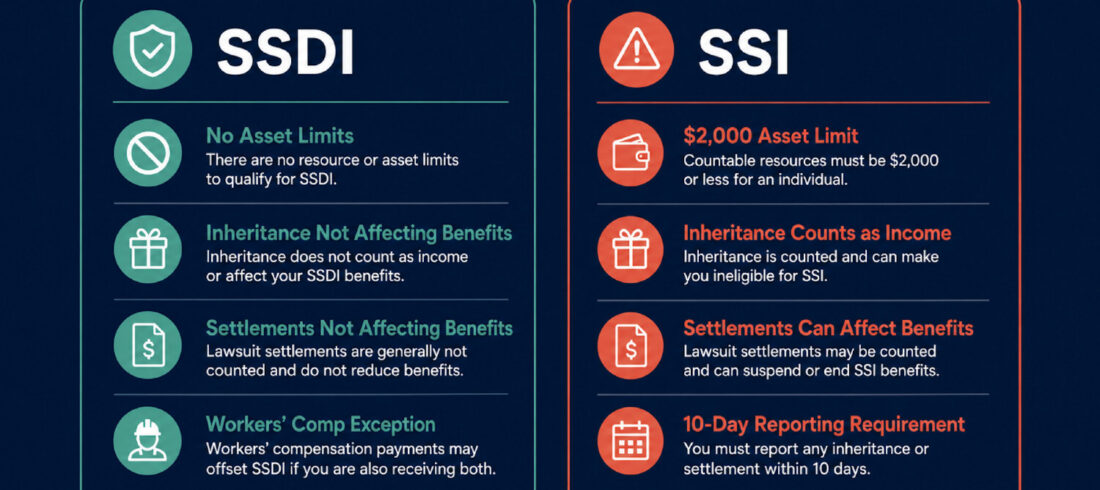
SSDI specifically as opposed to SSI. Your medical records aren’t part of this yet. It’s paperwork
and verification, and it typically takes two to four weeks before your file moves anywhere.
Months 1 Through 3: The Medical Review Begins
Once the SSA confirms you meet the basic eligibility requirements, your file gets sent to a state
agency called Disability Determination Services. DDS. This is the office that actually decides
your claim, and it’s where most of the initial waiting happens.
A DDS examiner is assigned to your case. Their job is to collect your medical records and figure
out whether your condition qualifies under the SSA’s definition of disability. They contact your
providers directly to request records, and that process is slower than you’d expect. Some doctors’
offices respond in a week or two. Others take a month. Some need to be followed up with
multiple times.
While records are coming in, you’ll probably receive some forms to fill out on your end. A
Function Report is common. It asks how your condition affects daily life, things like personal
care, household tasks, sleep, concentration, social interaction. An Activities of Daily Living form
is another one that sometimes comes through.
Fill these out based on your worst days. Not your best ones. Not the days when you pushed
through and managed. The SSA needs to understand what your life actually looks like on a
typical hard day, because that’s what they’re evaluating.
Sometimes the DDS schedules what’s called a Consultative Examination. A CE. This is an
appointment with a doctor the SSA selects and pays for, usually because your own records are
incomplete, outdated, or don’t give the examiner enough to work with. It’s not a red flag. It just
means they need more clinical information than what’s already in your file.
This whole stage generally takes somewhere between two and five months. Sometimes longer if
records are slow or a CE gets scheduled.
Months 3 to 6: The First Decision
At some point the examiner has what they need and makes a call. You get a letter.
If it’s an approval, the letter explains your benefit amount and the expected start of payments.
One thing to know: there’s a mandatory five-month waiting period that applies from your
established onset date. So even after approval, your first check might not come right away. The
letter will lay out the specifics for your case.
If it’s a denial, which statistically it probably is, take a breath. Around two thirds of initial
applications get denied. That number sounds discouraging but here’s the thing: it doesn’t meanthe process is over. Not even close. A lot of people who are ultimately approved, many of them,
don’t win until later stages. The initial denial is a hurdle, not a wall.
Read the denial letter carefully. The reason they give matters. It tells you what they found
lacking, whether that’s insufficient medical evidence, a conclusion that your condition doesn’t
meet the listing criteria, or something procedural. That information shapes what you do next.
You have sixty days from the date on the letter to file an appeal. Not from when you received it.
From the date on it. Don’t sit on this.
Months 4 to 8: Reconsideration
The first level of appeal is reconsideration. Your file goes back to DDS but gets assigned to a
different examiner, someone who had no involvement in the original decision. Fresh eyes on the
same file.
This is also your first real opportunity to strengthen what’s in your record. New medical
appointments, updated test results, additional documentation from providers, anything that’s
happened since your original filing can be added here. A thicker, more current medical record
changes what an examiner has to work with.
Reconsideration approval rates are lower than hearing approval rates. A lot of people who get
approved overall don’t get there at this stage. But it’s a required step before you can move to a
hearing, so it’s not something you skip. Some people do get approved here. And even for those
who don’t, the process of going through it often surfaces what needs to be stronger before the
next level.
Expect three to five months for a reconsideration decision.
Months 8 to 24 (Sometimes Longer): The Hearing
If reconsideration comes back as another denial, the next step is requesting a hearing before an
Administrative Law Judge. An ALJ hearing. This is where the process gets more formal, and also
where the odds shift in your favor more than at any prior stage.
The wait is brutal. Depending on which hearing office handles your case and what the current
backlog looks like, you could be waiting twelve to twenty-four months just to get a hearing date
after you request one. That’s not a mistake. That’s just the reality of how backed up the system is.
During that wait, keep seeing your doctors. This is not optional. The hearing will be evaluated
based on your condition as it exists at the time of the hearing, and a current documented medical
record is what gives your case real weight going in. Gaps in care during this period can hurt you.
The hearing itself is usually done in person or by video. You appear before the ALJ, you have the
chance to explain in your own words how your condition affects your ability to work, and a
vocational expert is typically present to speak to job availability given your limitations. Having adisability attorney or advocate with you at this stage makes a measurable difference in outcomes.
People with representation are approved at higher rates. It’s not subtle.
After the hearing, you wait again. ALJ decisions generally come back within one to three months
of the hearing date itself.
After an Approval: What Happens Next
An approval at any stage triggers the payment process, but approvals that come after a long
appeals process come with something the early approvals usually don’t. Significant back pay.
The SSA calculates back pay from your established onset date, limited to twelve months before
your filing date and minus the five-month waiting period. For someone who has been in the
process for two years or more by the time they’re approved, that back pay check can be a
substantial lump sum. It typically arrives separately from your first monthly payment and can
take a few weeks to process after the approval letter arrives.
Monthly benefits start the month following approval and are based on your earnings record, the
amount you paid into Social Security over your working years.
If the ALJ Also Denies
It happens. Not often, but it does. Two more appeal levels exist beyond the ALJ. The Appeals
Council can review the decision, though they take on a fairly small percentage of the cases
submitted to them. Federal district court is the final option after that.
Most claims don’t reach these levels. But for people with genuinely strong cases who have been
denied at the hearing level, pursuing further isn’t unreasonable, especially with experienced legal
help.
Things That Help at Every Stage
A few things stay true no matter where you are in this process.
Keep your medical appointments. Every stage of this process relies on your medical record. A
gap in care is a gap in your documentation, and gaps create problems. If cost or access has made
it hard to keep up with treatment, look into community health centers or sliding-scale clinics in
your area. Getting back into care matters.
Respond to anything the SSA sends you quickly. Forms, requests for information, appointment
notices. Everything has a deadline and missing one can stall or derail your claim on procedural
grounds alone, regardless of how strong your medical case is.Keep copies of everything. Your own copies. SSA correspondence, medical records, anything
you submit. If something gets lost or disputed later, having your own documentation is the
difference between being able to prove what happened and having no way to.
Check your status at ssa.gov through your my Social Security account. It won’t give you a
detailed breakdown of every internal step but it confirms where things stand and can flag if
something is needed from you.
So How Long Does This Actually Take
The range is wide and that’s not a cop-out answer, it’s just true. An approval at the initial stage
with no appeals can happen in three to six months. A claim that goes through reconsideration and
then an ALJ hearing and decision can take two to three years. The national average wait for a
hearing decision alone has historically run more than a year.
That’s a long time. It’s a genuinely hard thing to sit through, especially when you’re not working
and the financial pressure is real. But the stages are finite. Each one ends. And knowing which
stage you’re in, and roughly how long it typically runs, at least gives you something to orient
around while you wait.
You’re not lost. You’re in a process. There’s a difference.