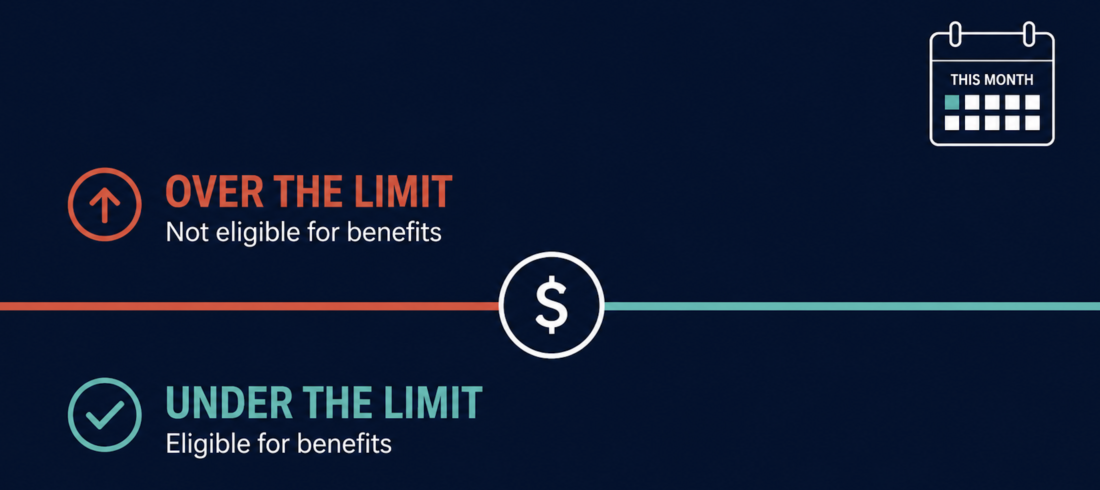
A relative passes away and leaves you something. A personal injury case finally settles. You win a small lottery prize. Whatever the circumstance, money arrives unexpectedly and immediately the question hits: does this affect my benefits?
The answer depends almost entirely on which program you’re on. SSDI and SSI look like similar programs from the outside. They’re both administered by the SSA, they both involve disability, and a lot of people receive both at the same time. But the rules around income and assets are completely different between them. And confusing the two when an inheritance or settlement is on the table can be a very expensive mistake.
Here’s what you actually need to know.
SSDI: The Program That Doesn’t Care About Assets
If you receive SSDI only, the news is largely good. SSDI is an earned benefit, not a needs based program. You qualified for it based on your work history and your disability, not based on how much money you have. The SSA does not set limits on your assets or your savings as a condition of receiving SSDI.
An inheritance doesn’t affect SSDI. A personal injury settlement doesn’t affect SSDI. A lottery win doesn’t affect SSDI. None of those things count as earned income under the program’s rules, and SSDI doesn’t care how much money you have sitting in a bank account.
The only thing that can affect SSDI benefits is work. Specifically, earning above the Substantial Gainful Activity threshold through employment or self-employment. A lump sum of money from any other source, inheritance, settlement, gift, lottery, doesn’t touch your SSDI. Full stop.
That said, there are two situations where receiving a lump sum can indirectly affect someone on SSDI, and both are worth understanding clearly.
Workers’ Compensation and Certain Public Disability Benefits
If you receive workers’ compensation benefits or certain other public disability payments alongside SSDI, there’s an offset rule. Combined, those payments can’t exceed 80 percent of your average pre-disability earnings. If a workers’ compensation settlement pushes the total above that threshold, your SSDI benefit gets reduced to bring it back under the limit.
This doesn’t apply to personal injury settlements from third-party lawsuits. It doesn’t apply to inheritances. It applies specifically to workers’ compensation and certain government disability programs, and only when combined with SSDI they exceed that 80 percent threshold.
If workers’ compensation is part of your picture and you’re expecting a settlement, it’s worth understanding how the offset calculation works before the money arrives rather than after.
SSI: An Entirely Different Set of Rules
SSI is where things get significantly more complicated. And this is where most people who panic about an inheritance or settlement actually have reason to pay close attention.
SSI is a needs-based program. To qualify and to keep receiving it, you have to remain below strict income and asset limits. The asset limit for an individual is $2,000. For a married couple it’s $3,000. Those numbers haven’t changed in decades and they’re not generous.
An inheritance counts as income in the month you receive it. Then it converts to an asset the following month. If that inheritance pushes your countable assets above $2,000, your SSI benefits stop. They don’t reduce. They stop entirely until your assets drop back below the limit.
A personal injury settlement works similarly. It arrives as income, then becomes an asset. If the settlement is large enough to push you above the asset threshold, SSI eligibility goes away until you spend down below $2,000 again.
This is the situation that catches people completely off guard. They receive money they desperately needed, don’t realize it affects their SSI, don’t report it to the SSA on time, and end up with an overpayment notice they have to pay back. Sometimes months or years later.
What Counts as a Countable Asset
Not everything you own counts toward the SSI asset limit. Understanding what’s excluded matters, because the exclusions are meaningful.
Your primary home doesn’t count, as long as you live in it. One vehicle doesn’t count regardless of its value, as long as it’s used for transportation. Household goods and personal effects generally don’t count. Life insurance policies with a face value under $1,500 don’t count. Burial funds up to certain limits don’t count.
What does count includes cash, checking and savings account balances, stocks, bonds, additional vehicles, additional real estate, and most other financial assets.
For people on SSI who receive a large settlement or inheritance, the spend-down options matter. Spending the money on excluded items, paying off a mortgage on your primary home, buying a vehicle you need, prepaying funeral expenses, making home modifications related to your disability, can bring your countable assets back below the limit while actually using the money for something useful.
There are also SSI-specific tools like ABLE accounts and special needs trusts that allow people with disabilities to hold assets above the standard limit without losing benefits. These have rules and eligibility requirements of their own, but they exist specifically for situations like this and are worth knowing about.
The Reporting Requirement Is Not Optional
Whether you’re on SSDI, SSI, or both, the SSA needs to be told about certain changes in your financial situation. The timing matters. A lot.
For SSI recipients, an inheritance or settlement needs to be reported to the SSA by the tenth of the month following the month you received it. Miss that deadline and you’re looking at potential overpayments and penalties on top of the benefits disruption.
For SSDI-only recipients, an inheritance or personal injury settlement generally doesn’t need to be reported because it doesn’t affect the benefit. But workers’ compensation settlements do need to be reported. And if you receive both SSDI and SSI, the SSI reporting requirements apply to the SSI portion of your benefits.
When in doubt, report it. Calling the SSA to ask whether something needs to be reported costs you nothing. An unreported change that should have been reported can result in an overpayment that the SSA pursues aggressively, sometimes years after the fact.
Personal Injury Settlements: A Closer Look
Personal injury settlements come with their own set of complications worth addressing specifically, because they’re common and the details matter.
The portion of a settlement that compensates for medical expenses is generally not counted as income for SSI purposes if it’s used for medical expenses within the same month it’s received. The portion that compensates for lost wages is treated differently than the portion for pain and suffering. How the settlement is structured can affect how much of it counts as income and for how long.
If you’re expecting a personal injury settlement and you’re on SSI, the structure of that settlement is something worth discussing with both your personal injury attorney and someone familiar with SSI rules before it’s finalized. A settlement structured as a special needs trust, for example, may preserve SSI eligibility in ways a lump sum payment wouldn’t. Once the settlement is finalized and paid, your options narrow significantly.
Medicaid and What Changes When SSI Stops
One thing a lot of people don’t think about until it happens is the Medicaid connection. In most states, SSI recipients are automatically enrolled in Medicaid. When SSI stops because assets exceeded the limit, Medicaid often stops with it.
If you’re relying on Medicaid for ongoing medical care and a windfall temporarily knocks you off SSI, that gap in coverage is real and immediate. It doesn’t resolve itself until your assets are back below the limit and SSI eligibility is reinstated. Plan for it. It’s one of the less obvious consequences of an asset-limit disruption and it hits people hard when they’re not expecting it.
What to Do Right Now If This Applies to You
If you’re on SSDI only and you’ve received or are expecting an inheritance or settlement, take a breath. The asset rules that govern SSI don’t apply to you. The main thing to verify is whether any workers’ compensation offset applies to your situation, and if not, your SSDI is not at risk from a lump sum of money.
If you’re on SSI, or on both SSDI and SSI, this requires more careful attention. Know your current countable asset total. Understand what the incoming money will do to that total. Report it to the SSA within the required window. And before a large settlement is finalized, get guidance on structuring options that may protect your eligibility.
The rules here are specific enough that the details of your individual situation determine a lot. If you’re not certain how a specific inheritance or settlement will interact with your benefits, a free evaluation is a low-cost way to get clarity on what applies to your case before you make any decisions. Understanding the rules before the money arrives puts you in a much better position than figuring it out after.